
Software Contractor Integration: Setting Realistic Expectations and Accelerating Time-to-Value
A cybersecurity contractor we recently engaged at a major US bank took nearly four months to reach full productivity. Rather than viewing this as a failure, smart engineering managers recognize this as valuable data for optimizing future contractor integrations.
Why Complex Environments Demand Longer Integration Periods
Financial institutions exemplify integration complexity: regulatory frameworks (SOX, PCI DSS, FFIEC), hybrid legacy-cloud architectures, risk-averse operational cultures, and extensive vendor ecosystems. Each layer adds cognitive load that contractors must navigate while delivering value.
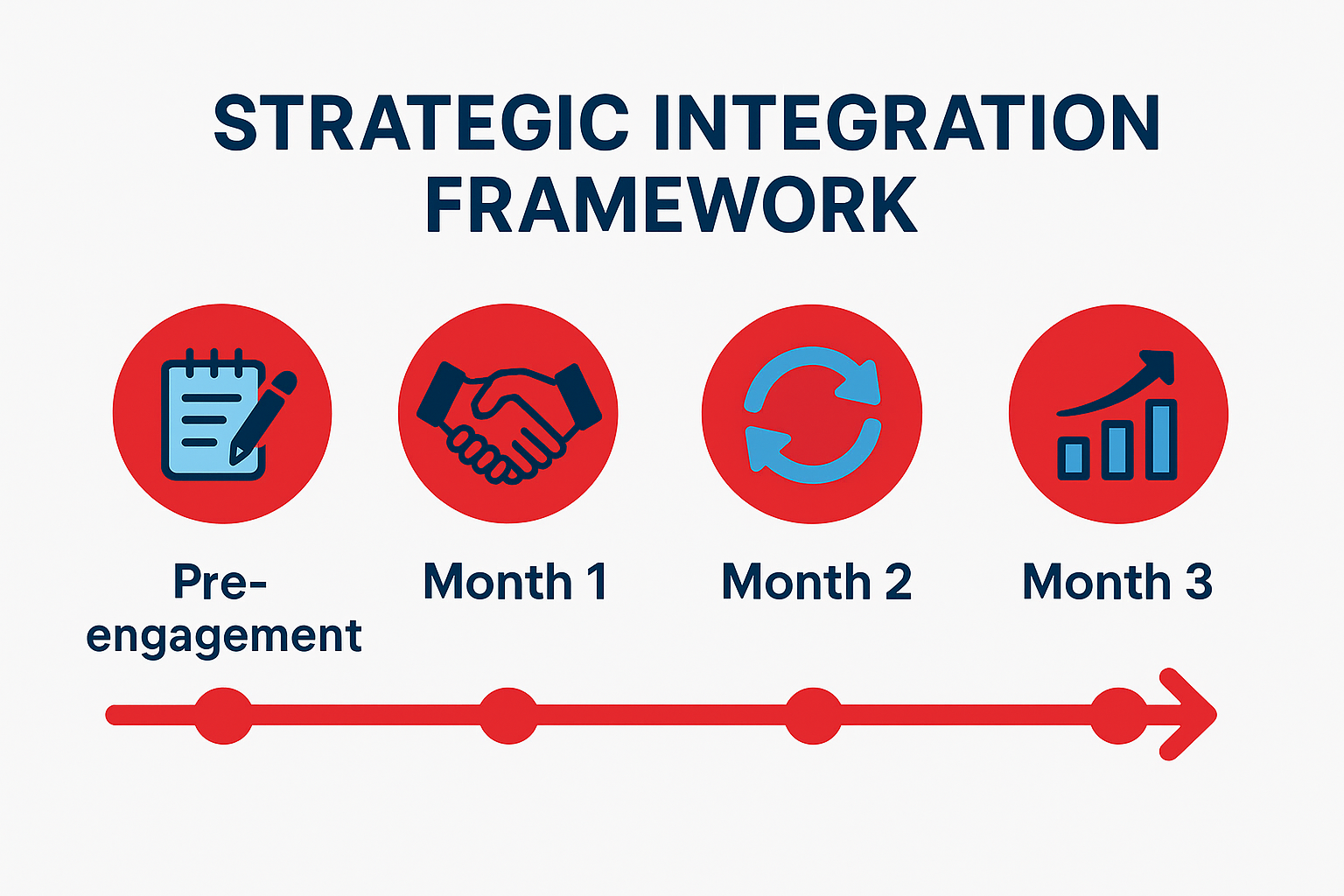
The Strategic Integration Framework
Pre-engagement Planning Set realistic timeline expectations based on system complexity, not wishful thinking. For complex environments, budget 3-6 months for full integration. Communicate this timeline explicitly during contract negotiations to align expectations and pricing models.
Structured Onboarding Process Create a 30-60-90 day milestone framework. Week one should focus on access provisioning and basic system orientation. Month one targets foundational understanding of core systems. Month two emphasizes workflow integration and stakeholder relationship building. Month three focuses on independent contribution and knowledge transfer initiation.
Knowledge Transfer Optimization Pair contractors with internal technical leads, not junior team members. Schedule regular check-ins to identify knowledge gaps before they become productivity blockers. Document tribal knowledge proactively rather than reactively.
Measurement and Adjustment Track integration metrics: time to first meaningful contribution, stakeholder feedback scores, and system familiarity assessments. Use this data to refine your integration process for future hires.
The Bottom Line
Contractor integration speed directly correlates with your organizational maturity in onboarding processes. Engineering managers who invest in structured integration frameworks see 40% faster time-to-productivity and significantly higher contractor satisfaction scores.
The four-month timeline isn't a bug - it's a feature of complex systems. Your job as an engineering leader is to optimize within that reality, not fight against it.


